Services
Lameness & Orthopaedic Investigations
A methodical route from “something is not right” to an answer you can act on.
The problem
Lameness is a question, not a diagnosis
“Lame in front” tells you almost nothing. The horse may be compensating for a hind limb. The head nod may be the consequence of the problem rather than its location. Two horses with identical gaits can have entirely different pathology, and the treatment for one would do nothing for the other.
Where possible the aim is to localise the source of pain before imaging, so that imaging is directed at the region the horse has pointed towards.
Subtle, multi-limb and long-standing cases are welcome, as are second opinions.
The workup
What a full investigation involves
-
History and static examination
How the horse works, what has changed and when, shoeing, how the horse performs on different surfaces, and previous injuries and treatments. Then a hands-on examination: visual appraisal of limbs and overall body conformation, thorough palpation and examination of the horse, particularly the limbs, neck, back and pelvis.
-
Dynamic examination
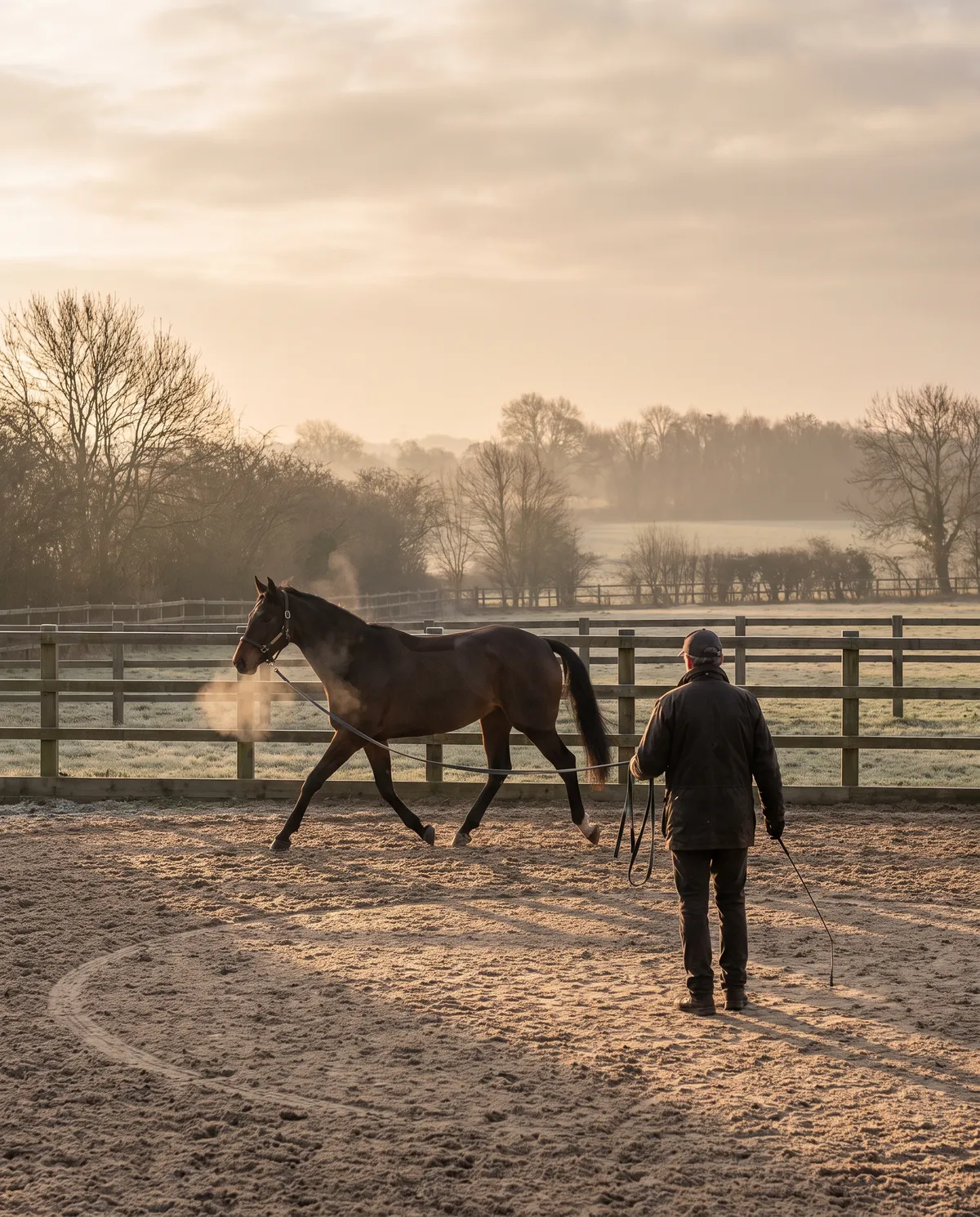
Walk and trot in hand on a hard surface, flexion tests, lunged on both reins on hard and soft going, and ridden assessment where the problem only appears under saddle.
-
Diagnostic analgesia
Nerve and joint blocks, usually working from the foot upwards, followed by lameness reassessment. This helps to identify the source of lameness where visual or clinical signs are not always apparent.
-
Imaging
Imaging modalities such as digital radiography and ultrasonography, usually directed at the region that diagnostic analgesia has identified as the source of lameness or poor performance.
-
Diagnosis and plan
Discussions regarding what is wrong, what can be done, the estimated costs, and what a realistic return to work looks like. A rehabilitation plan, taking into consideration the horse and facilities in order to facilitate the best outcome.
Treatment
Orthopaedic treatment and rehabilitation
Treatment and rehabilitation considered together, from the outset.
- Intra-articular medication of joints, tendon sheaths and bursae, tailored to the individual horse
- Regenerative and orthobiologic therapies for selected tendon, ligament and joint conditions
- Extracorporeal shockwave treatment for appropriate orthopaedic and soft tissue conditions
- Class IV K-Laser therapy — photobiomodulation to support tissue repair and manage pain
- Veterinary acupuncture, as a member of the Association of British Veterinary Acupuncturists
- Structured rehabilitation programmes with repeat examinations and objective monitoring
- Referral for advanced imaging or surgery when a case needs it
Recovery takes time, and rehabilitation gives that time direction. Programmes are written to assist you with your horse, the facilities and the time available. A collaborative approach with your farrier, physiotherapist, rehabilitation professional, trainer and rider is also encouraged.
Common questions
Lameness questions
How long does a lameness workup take?
Allow at least half a day. A straightforward case may be quicker, but blocking works in sequence and each block needs time to take effect before the horse is reassessed.
Does my horse need to be shod or unshod?
Leave the horse as it normally works unless you are told otherwise. If shoes need removing for radiographs it can usually be arranged on the day, and it is worth mentioning your farrier’s schedule when you book so the visit can be timed sensibly.
What do I need to have ready for the visit?
A hard, level surface to trot up on, somewhere safe to lunge on both a hard and a soft surface, and a competent handler. Power and shelter are helpful for imaging. If the horse is only lame when ridden, have the rider and tack available too.
Should I give bute before the vet arrives?
No — not without being asked to. Pain relief masks exactly what the examination is trying to measure. If the horse is on medication already, say so when you book so the visit can be planned around it.
Can you treat the horse on the same visit?
Often, yes. Where a diagnosis is reached and treatment is straightforward, it can usually be carried out there and then. Some treatments are better planned for a separate visit, and that will always be discussed with you first.
Can I ask a veterinary question through the website?
The enquiry form is for general questions — registering, availability, arranging a visit and accounts. Clinical questions need a conversation, and the inbox is not monitored around the clock, so anything concerning your horse’s health should come by telephone.
How do I register as a new client?
Send an enquiry through the contact page or telephone the practice. You will be asked for your details, your yard, and a little about your horses so the right amount of time can be set aside for a first visit.
Concerned about a horse?
Lameness cases are best discussed by telephone, so the right amount of time can be booked for the visit.